In the late 19th century, the Castellani family revived a 3,000-year-old lost art: Etruscan Granulation. This technique, involving the welding of microscopic gold beads without melting the base, represents the pinnacle of goldsmithing.
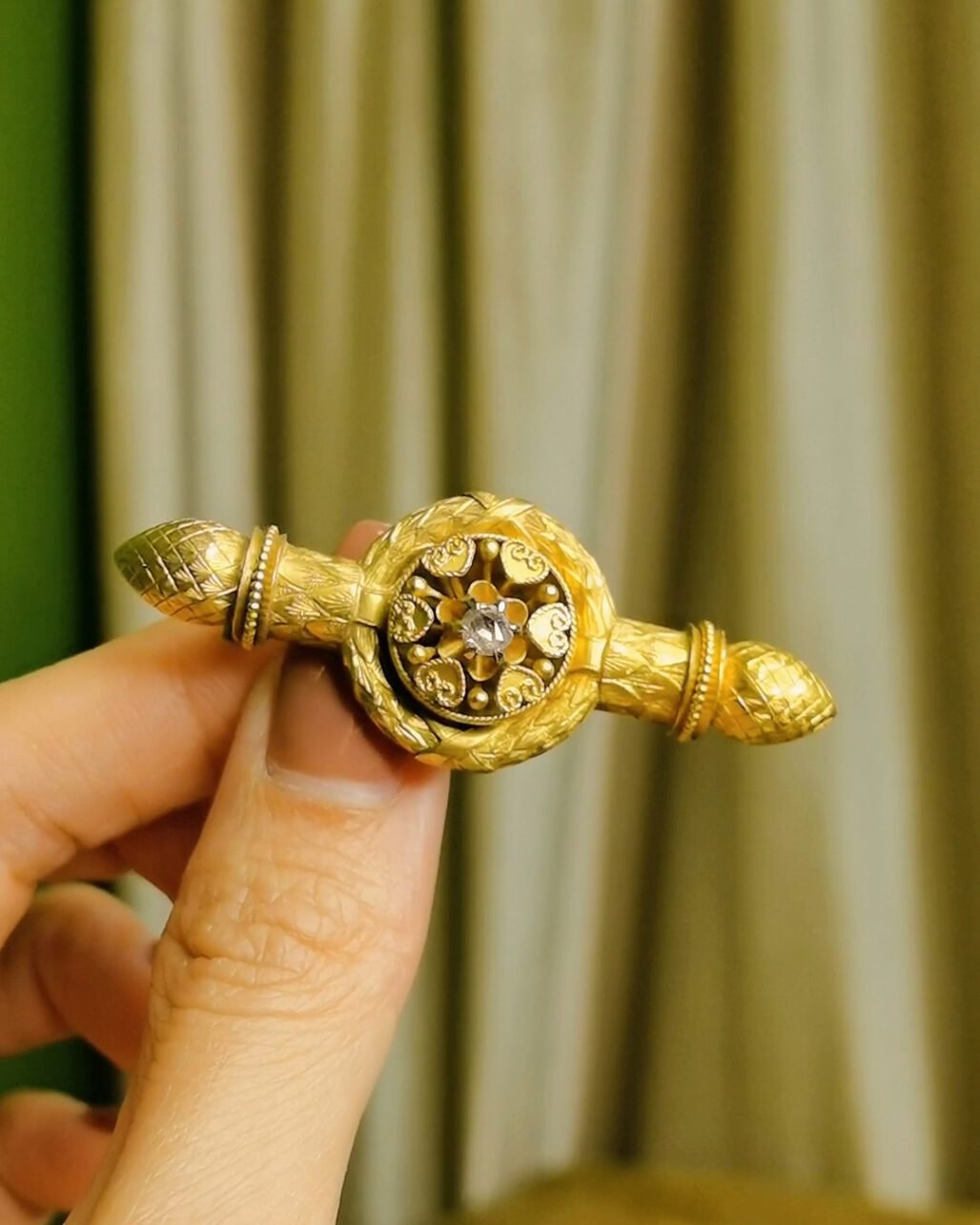
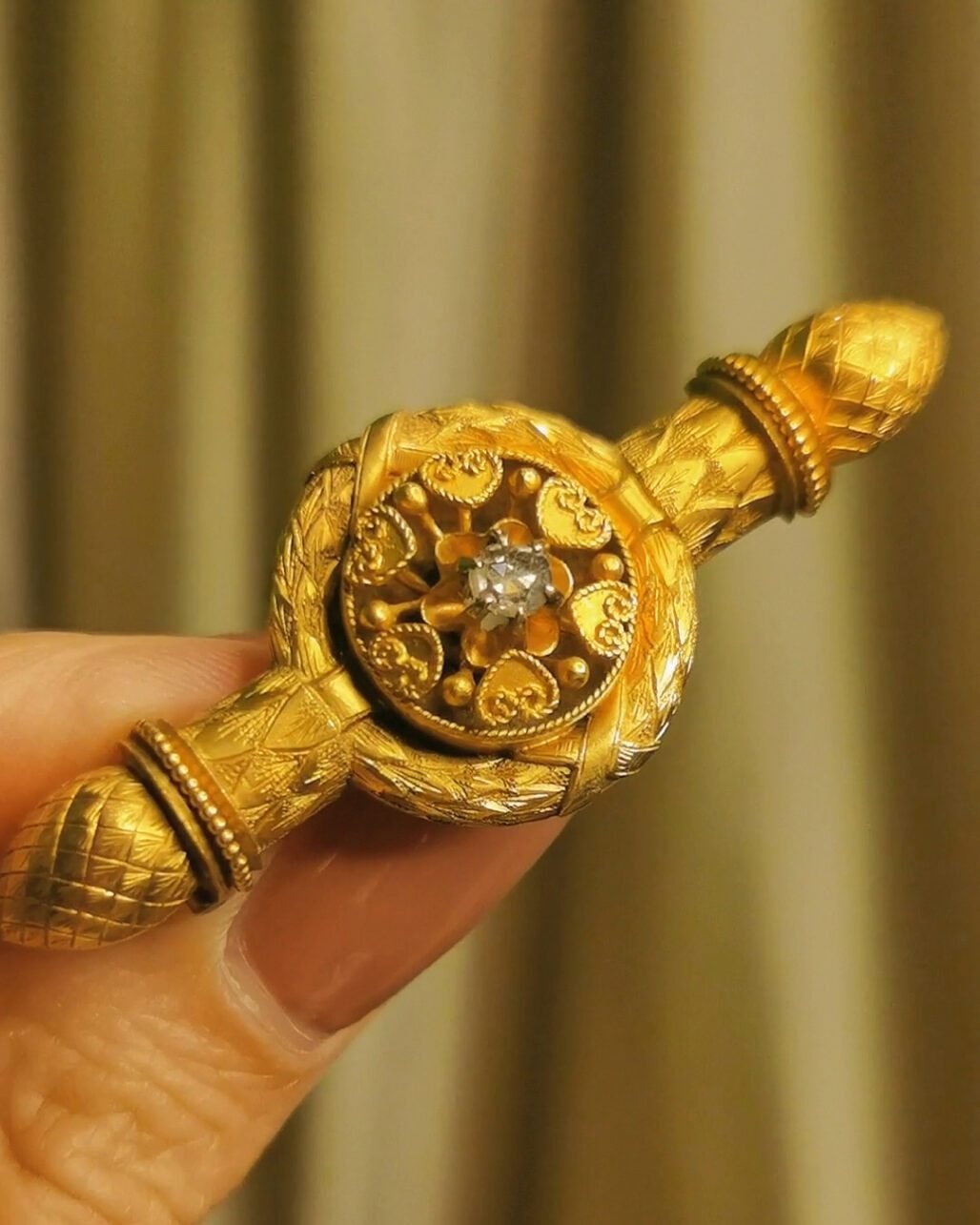
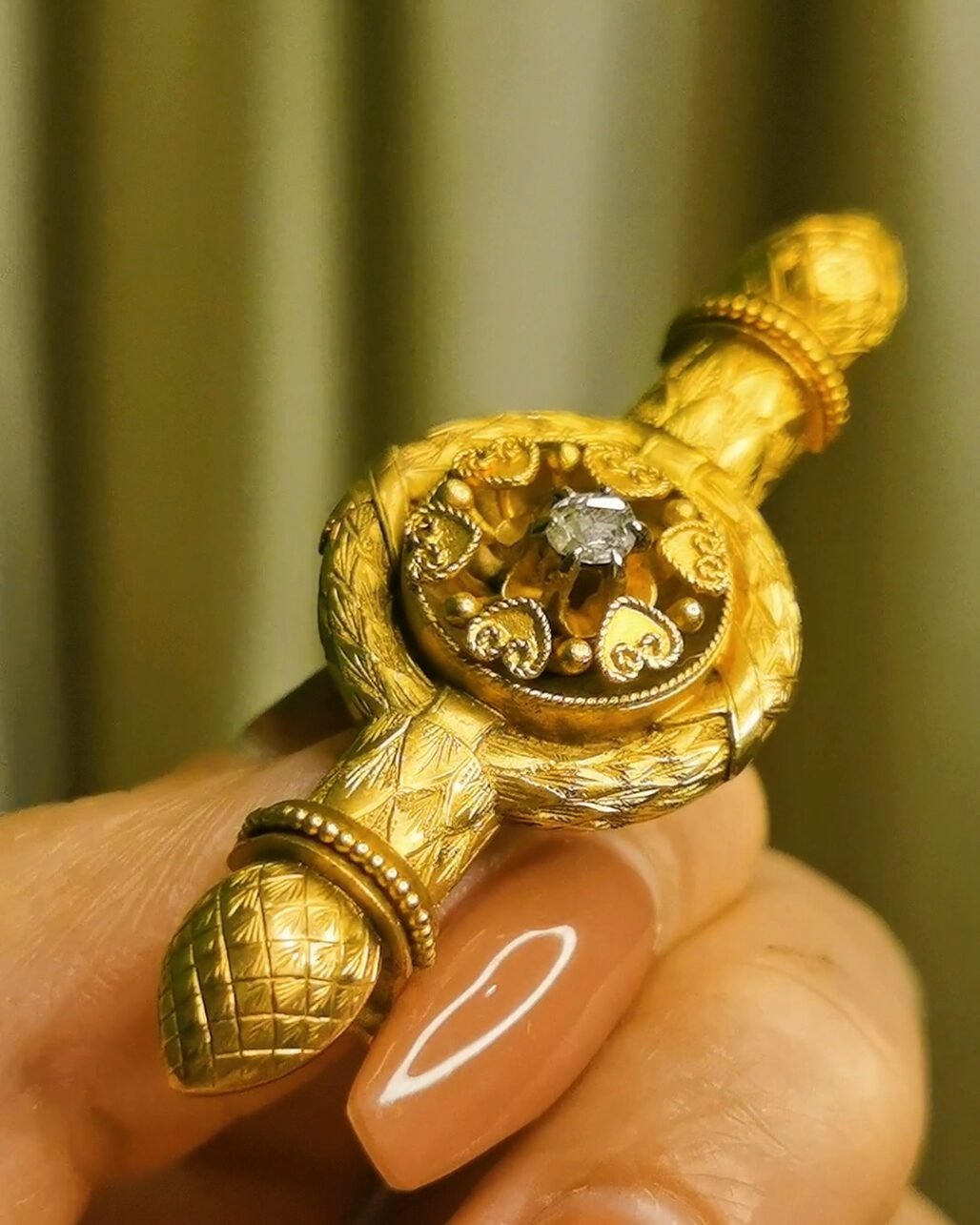
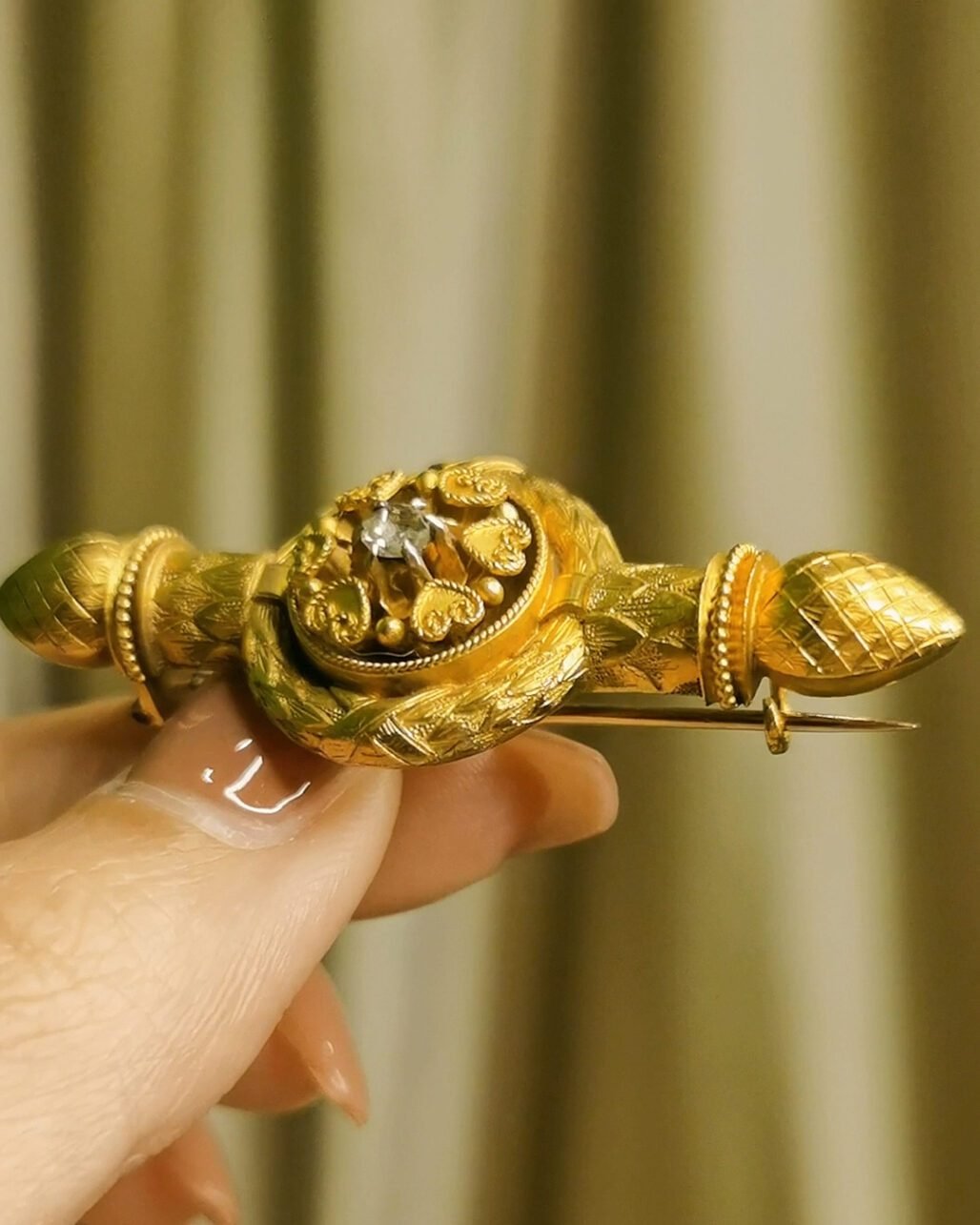
This Late Victorian Antique Brooch is a stunning example of that era. Crafted in rare 15k Gold, it features intricate relief carving and granulation. Shaped like a “Mini Scepter” and centered with an Old Cut Diamond, it exudes dignity, solemnity, and inviolable power—a true symbol of social status.
“A technique from 3000 BC, revived for the Victorian elite.”
Granulation is the art of fusing tiny spheres of gold onto a gold surface using a hidden method that leaves no visible solder. Originating in Mesopotamia and perfected by the Etruscans (9th–1st Century BC), this skill was lost for centuries until the Castellani family rediscovered it in the 19th century. This brooch is a testament to that revival. The microscopic gold beads create a texture and play of light that modern casting cannot replicate, making it a “Golden Fossil” of art history.
💎Etruscan Revival Style: Symmetrical, dignified, and rich in gold work. This style reflects the Victorian fascination with archaeology and ancient civilizations. Recent Sotheby’s auctions have seen Etruscan-style pieces sell for multiples of their estimates, proving their soaring collector value.
✨Rare 15k Gold: Stamped with the hallmarks of British history. 15k gold was a standard used exclusively in Britain between 1854 and 1932. Its warm, rich hue is distinct from modern alloys and guarantees the piece’s antique authenticity.
🎨Symbol of Power: The design resembles a ceremonial scepter. In an era where jewelry indicated rank, this piece would have signaled wealth, refined taste, and high social standing. It is solemn, sacred, and stunning.
What is Etruscan Revival jewelry?
It is a style from the Victorian era (mid-to-late 19th century) that imitated the designs and techniques of ancient Etruscan jewelry found in Italian tombs. It features heavy gold work, wirework (filigree), and tiny gold beads (granulation).
Why is Granulation difficult?
The challenge lies in heating the gold enough to fuse the tiny beads without melting them into a puddle. It requires immense skill and precise temperature control, a craft that was considered “magic” by ancient goldsmiths.
Style
Etruscan Revival, Archaeological Revival
Technique
Granulation (Gold Beads), Relief Carving
Metal
15k Solid Gold (British Antique Standard)
Main Stone
Old Cut Diamond
Motif
Scepter (Symbol of Power)
Era
Late Victorian (c. 1880s)
—Complimentary worldwide shipping
—For orders outside the HK, local duties and taxes may apply and are the responsibility of the purchaser

 🔍
🔍 🔍
🔍 🔍
🔍 🔍
🔍 🔍
🔍